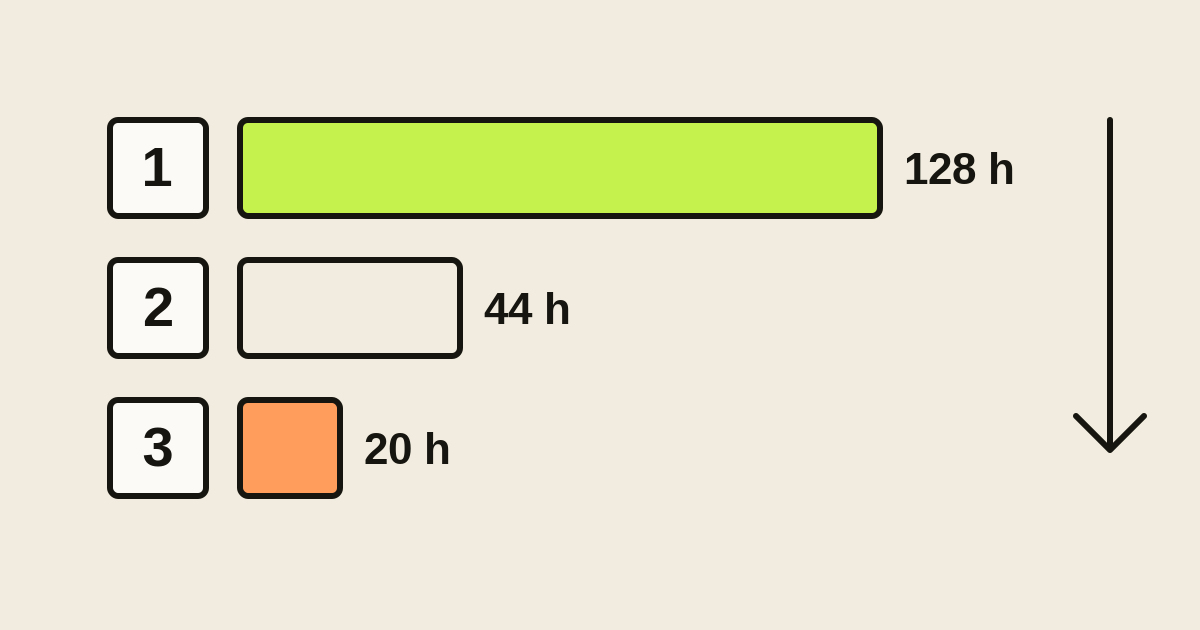
An example distributor has three tasks eating its month: entering orders, answering customer questions and issuing invoices.
- 128 ha month entering orders by hand
- 44 ha month on customer questions
- 20 ha month on invoicesA case built for the book, not a client.
The temptation is to start with the one that takes the most hours, or the one that shows the most. It is almost never the best first bet.
Hours are not enough
What changes the order is how easy a task is to automate. I ask three questions about each one:
- Are the rules clear, or does each case get solved differently depending on who looks at it?
- Is the data tidy, or do you have to gather it from emails, photos and loose spreadsheets?
- Are few systems involved, or does information have to move between five programs that do not talk to each other?
With that you weigh the hours. In the distributor, customer questions come second by score and still go last, because that is the task the customer sees. If the system gets it wrong there, the customer finds out.
The full formula, each task's score and the signs for ruling one out are in the book. Here are the cases.
Case 1: a spreadsheet and no AI
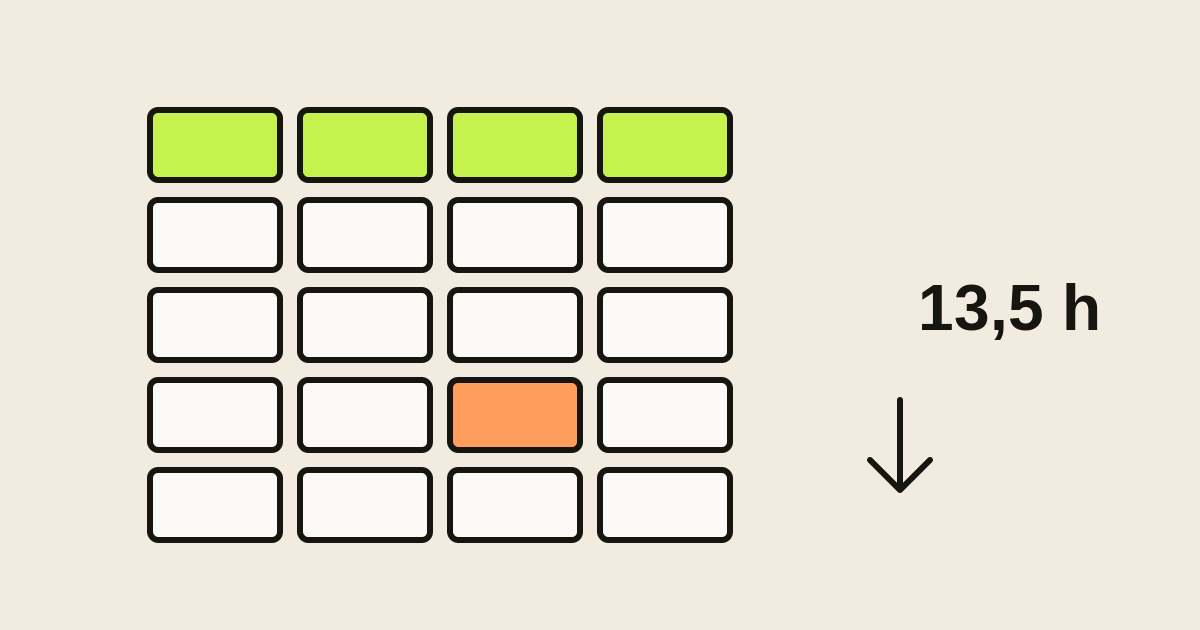
At a restaurant in Chillán, Chile, purchasing took about 30 hours a month and dropped to 16.5, according to the degree thesis of the engineering student who made the change. The 30 hours before are his estimate, not a measurement.
He did not use AI. He went from buying every day, with quantities worked out by feel, to buying weekly and monthly, with a list that comes out of a plan in a spreadsheet. That is 13.5 hours less a month, 45%.
And that is less than a quarter of the hours it takes, in that math, to pay back a contracted project. This does not pay for a project. The spreadsheet fixes it, and that is fine.
Case 2: the math that does not close
A fuel distributor in Peru cut the time it spends on each order from 11 to 4.5 minutes. It did it with a software robot, a program that works the screen and keyboard the way a person would. Two engineering students described it in their degree thesis, without naming the company.
The approved budget was USD 16,000. The savings, converted to dollars, about USD 1,260 a month. That is 13 months to recover it, and that is the optimistic version, because the thesis does not say what the software costs afterwards.
And the admin team stayed at four people. No salary stopped being paid. It is a case where the task got better and the cash barely noticed.
What I take from the two
- Before hiring, measure how many hours the task takes today. Without that number there is no math.
- Try the cheapest fix first. Sometimes it is a spreadsheet and sometimes it is doing nothing.
- Ask for the quote in stages and start with one part of the work. The pilot decides whether you go on.
If you want to see with your own numbers whether a task pays back, the calculator gives you the result in a minute, and saves nothing. And the book's twelve-month rule tells you whether to go on or stop.