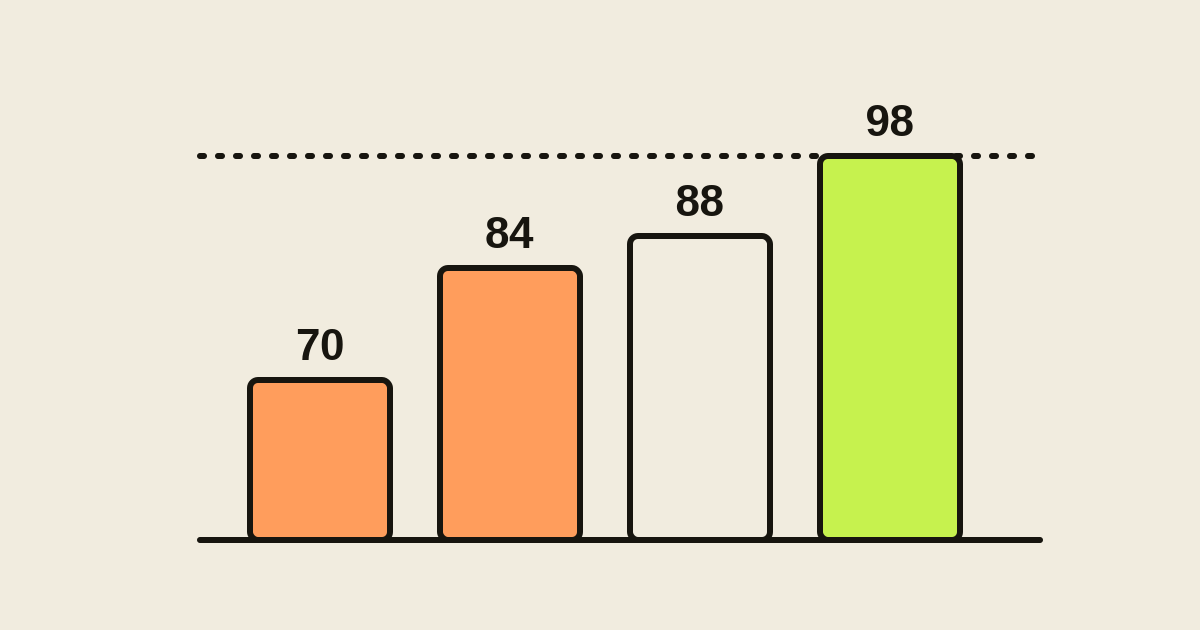
In January 2025, the system that validated invoices at a Peruvian waste-management company got 70 out of 100 approvals right. In April, 98, according to the degree thesis of two engineering students, who do not name the company.
With January's number, anyone would have switched it off.
| Month | Approved and correct |
|---|---|
| January | 70 out of 100 |
| February | 84 |
| March | 88 |
| April | 98 |
Source: degree thesis, Universidad Peruana de Ciencias Aplicadas, June 27, 2026. These are the results its authors report; they do not define how they calculated reliability.
Getting to 98 took four months of adjustments, with the accounting team checking alongside. And it had a cost: about USD 25,000 the first year, across the build, the platform and support. The thesis does not calculate the savings in money.
The cut-off rule, before starting
Had the plan been 60 days with a minimum of 98, this system would have been switched off at the end of February, at 84. That is the price of writing the rule first: sometimes it shuts down a project that would have made it two months later.
It is a price worth paying. Without the rule, the mood of the day decides, and projects going badly get another year because the money is already spent.
98 does not close the measurement either
In April the system approved 556 invoices on its own. 2% is about 11 with something wrong, and the thesis says they no longer need to be checked again.
Without a sample, nobody knows which 11 they are. Checking a random sample every so often is what separates a system that works from one that seems to.
What to set up before launching
- Today's value of each number you will watch. Without the before, the after proves nothing.
- The target and the threshold that forces you to stop and review, with a date.
- One person who looks at the dashboard every week. It takes about ten minutes.
- A random sample of what the system approves on its own.
And the other half is the money: the calculator tells you in which month it pays back and when the maintenance fee breaks the math. Measuring and calculating are two different things, and you need both.