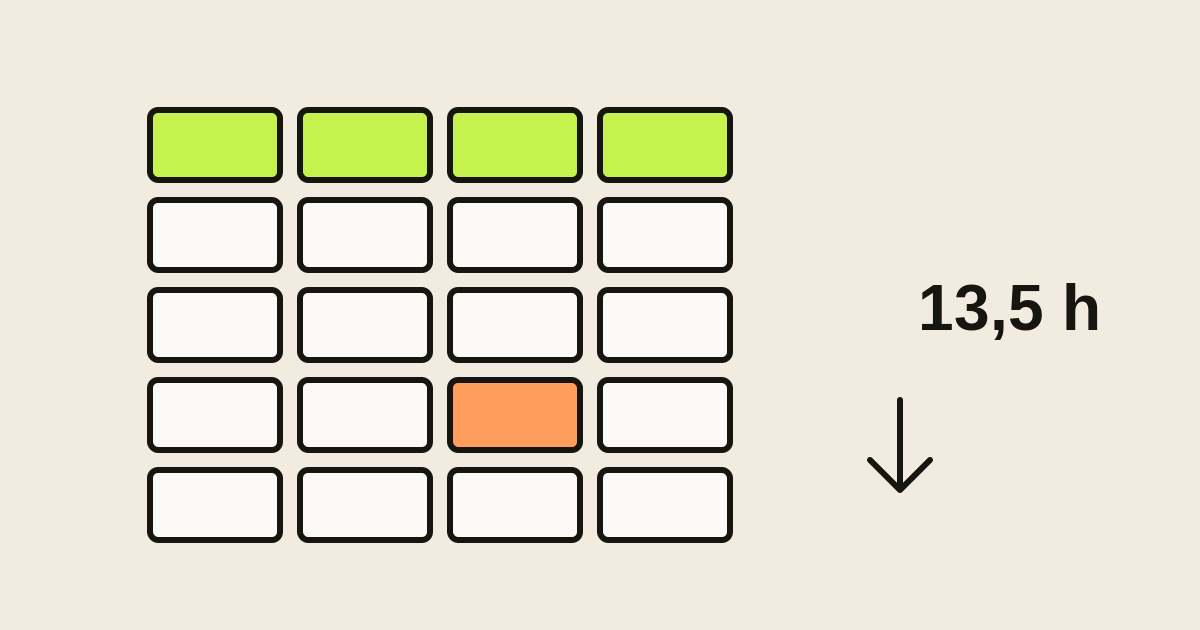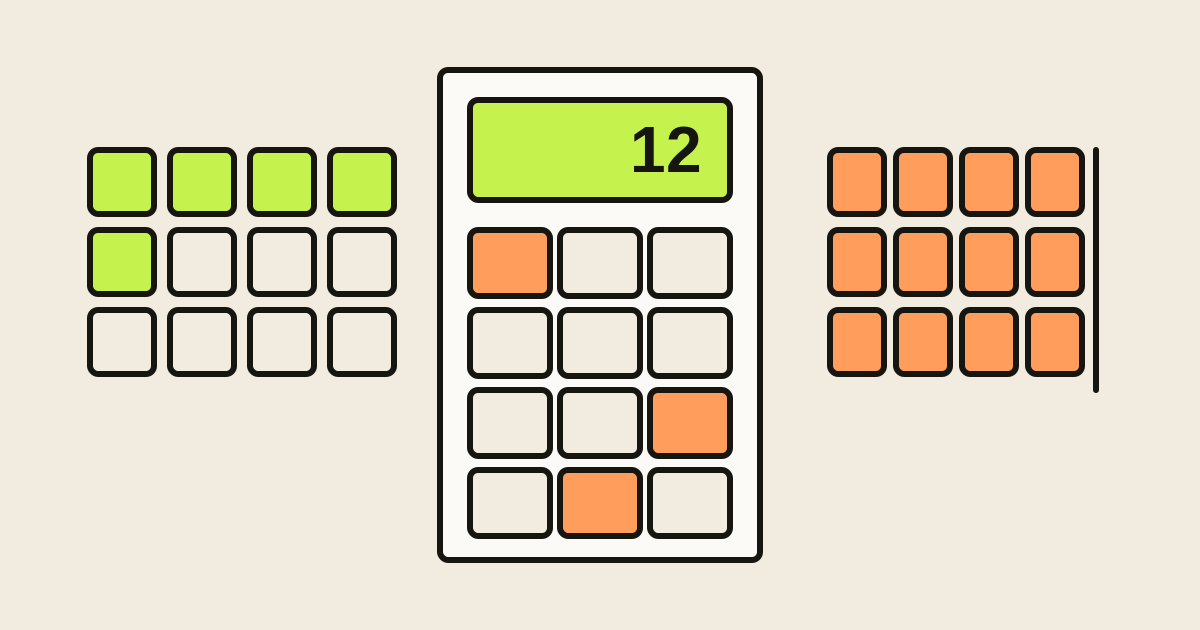
A distributor enters 70 orders a day by hand. That is 1,540 a month. At 5 minutes each, 128 hours a month. With the hour at USD 9, USD 1,152 every month and USD 13,824 a year.
It is the example I use in chapter 7 of my book, with salaries and payroll costs from Argentina. It is not a client: it is a case built to show the math.
What you gain, in concrete terms
- Hours that come back to the team. In the target case, the system enters each order and someone checks it in 1 minute instead of entering it in 5: 102 of the 128 hours are freed, USD 922 per month. In the floor case, half the orders arrive badly written and are still entered by hand: 40% is freed, 51 hours, USD 462.
- Growing without hiring in a hurry. The business can grow with the people you already have, instead of hiring the day the work no longer fits in the workday. And a new position costs its salary plus payroll costs.
- An agent that works outside office hours. It answers at night and on weekends.
Careful with the last one. Only the hours your people would have worked count: an agent answering on a Sunday adds no hours to the savings.
And a freed hour is not money yet. It becomes money through one of three destinations: work nobody does today that brings in revenue, like calling the customers who stopped buying; the hire you no longer need; or the hours you stop paying for, starting with overtime.
If none of that happens, you saved time and spent money.
The costs people forget
The numbers that circulate count the savings and forget three lines.
- Your time and your team's. Someone explains the process to whoever builds it, gathers examples, tests and corrects. And once it works, someone inside looks at it every week. In the example, the book's assumptions: 15 of your hours at USD 25 and 25 team hours at USD 9 during the build, USD 600; and an in-house owner at 2 hours a week, USD 78 per month.
- Maintenance. There are two references and both come from someone selling it. A US rate-card blog, which teaches people who sell automations how to charge, puts a fee of USD 650 to 1,200 per month on its cheapest plan. An agency recommends reserving 10% to 20% of the build cost per year. Neither says where the number comes from. In the example, 20% of USD 3,000 is USD 600 a year, USD 50 a month.
- The tool that charges by usage. Today's price is for today's volume. If orders double, that cost does too. Ask for the price at your current volume and at double.
And systems fail. In a master's thesis about a Czech company it does not name, 331 of 11,703 runs failed: 2.8%, at least four a week across 49 processes. How long it took to handle them, nobody measured.
If the distributor failed at that rate, 43 orders a month would not go through on their own. Two per business day.
Do the math with your numbers
The calculator starts with the distributor's numbers. Change the ones that are yours: the country, the cost per hour of whoever does the task, the hours it takes, how much can be automated and what it costs. The employer costs for each country are estimates and you can correct them.
It gives two results. The first is what happens if it turns out as promised by whoever sells it to you. The second, if it comes out at half: part of the work stays by hand and the rest still needs checking. A single calculation always comes out well, because whoever wants the project is the one who makes it.
It runs in your browser. Nothing is saved, nothing is sent and there is no form.
Social Security 6.2% and Medicare 1.45%. State unemployment and workers' compensation are missing, and they change by state.
The example amounts are the book's example in dollars. If you change country, fill in the amounts in its currency.
The twelve-month rule
It has three outcomes.
- The floor pays back in 12 months or less: yes.
- Only the target pays back in 12 months: try it on part of the work, not of the price, before handing over the whole task. The pilot decides.
- Neither pays back in 12 months: no, unless the project is justified by another number, like customer satisfaction or the sales you win by answering sooner.
The distributor lands on the second: the floor pays back in 14 months and the target in 5. The math says it is worth testing.
I cut at twelve months because the prices of these tools, and what they can do, change from one year to the next. A three-year calculation rests on data that does not exist yet.
Read backwards, the rule says from what size a project is worth it. With the example's costs you need 56 freed hours a month to pay back in a year. With an hour of USD 4.5 it is 102; with one of USD 29.4, 25.
Testing is not free. If you cut the pilot on day 60, you lose the USD 3,600 of the build and two months of monthly cost: USD 4,016, of which USD 600 are your own hours. And saying no has a price too: the distributor keeps paying USD 1,152 a month.
The fee that breaks the math
Let's change one thing. Instead of reserving USD 50 a month, you pay an outsider a fee to maintain it. The in-house owner stays in the math: even if someone else maintains it, someone inside answers for what the system does.
| Monthly fee | Floor (savings of USD 462) | Target (savings of USD 922) |
|---|---|---|
| USD 200 | USD 104 left per month. Pays back in 35 months | USD 564 left per month. Pays back in 6 or 7 months |
| USD 650 | Loses USD 346 per month | USD 114 left per month. Pays back in 32 months |
| USD 1,200 | Loses USD 896 per month | Loses USD 436 per month |
Each cell is the savings, minus the tool (USD 80), minus the fee, minus the in-house owner (USD 78). The investment is the usual USD 3,600. Source: chapter 7 of the book.
At USD 1,200 a month the project loses money every month and never pays back. Not even the target saves it. The first year is USD 8,832 lost.
The USD 200 fee is the best reasonable case, not the expected one. Three providers in Latin America and Spain publish list-price fees of about USD 40 to 400 a month, and each list covers different things. The USD 650 and 1,200 are the ends of the cheapest plan of the US rate-card blog: what happens if you are quoted at US prices.
To negotiate, bring two numbers. The break-even fee is the month's savings, minus the tool, minus your own hours: 922 − 80 − 78 = USD 764. At that fee you neither win nor lose each month, and the build goes unrecovered. The maximum fee is the one that lets you recover the USD 3,600 within the twelve months of the rule: 764 − 300 = USD 464.
With the floor, break-even is USD 304 and the maximum USD 4. Almost no fee fits.