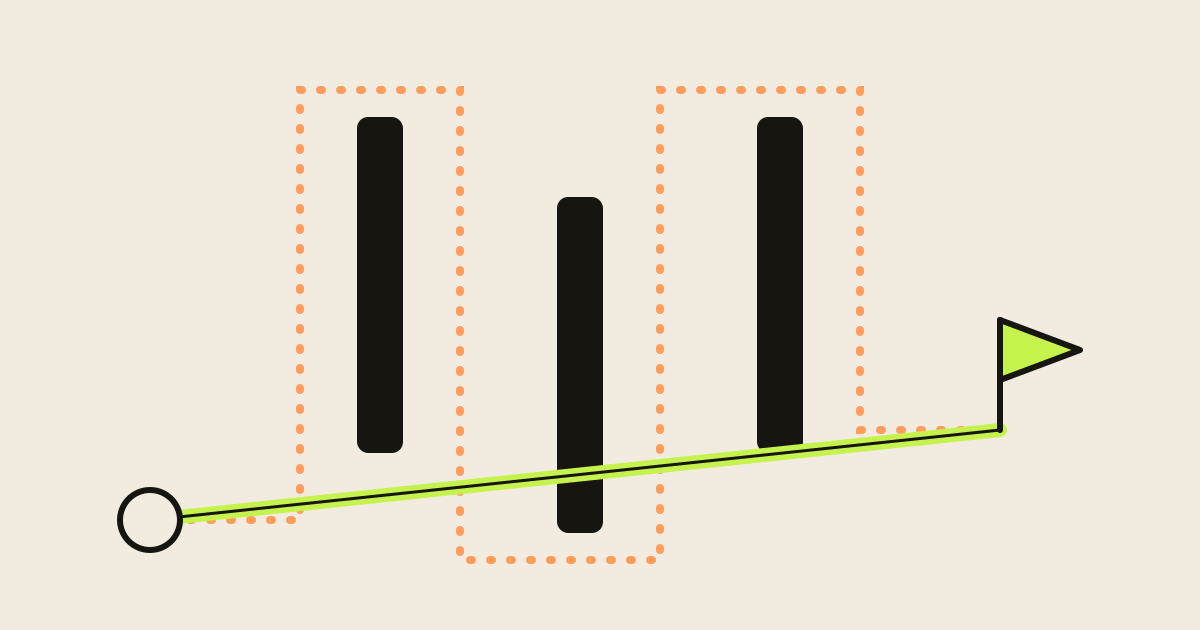
In almost any agent there are two kinds of work mixed together. One is writing: drafting a reply, building code. The other is deciding: which team this email goes to, whether this order is fraud, how urgent it is.
Today both get asked of the same model, which takes seconds and charges for every word it writes, even when the decision is a single one.
On October 13, 2026, TypeSafe introduced a model built only for the second half. It's called Jev.
What it is
Jev is the first model in what TypeSafe calls the System One class. The name comes from “Thinking, Fast and Slow” by Daniel Kahneman: fast thinking, a decision by intuition without writing anything out.
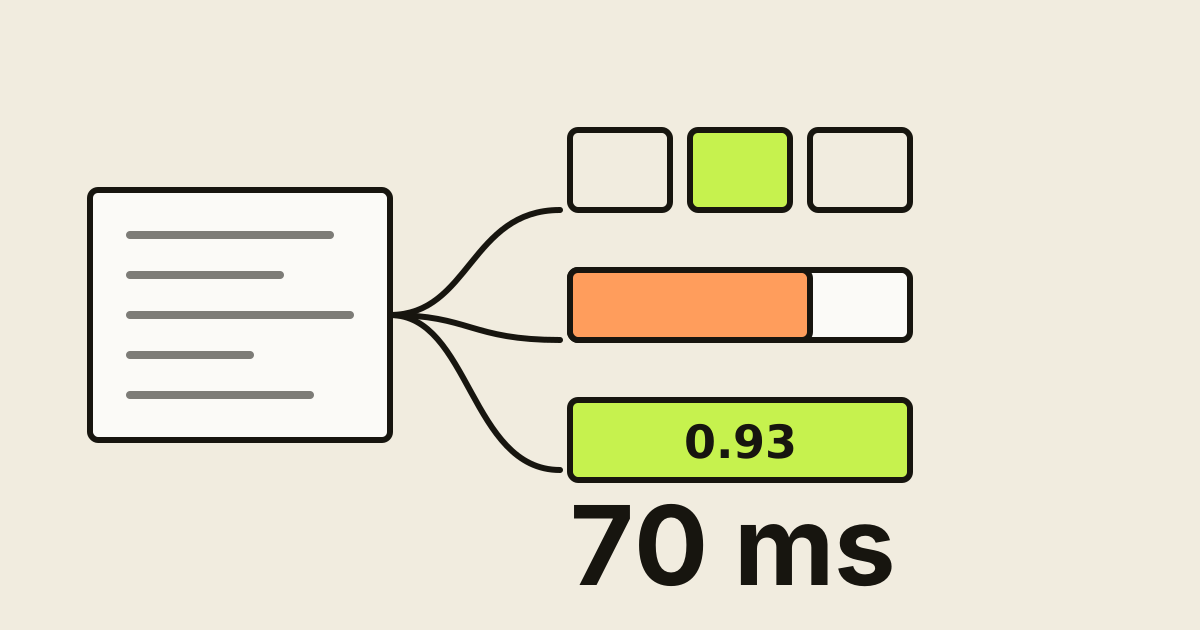
It takes a state, which can be text, JSON or arrays, and several questions about that state. It answers them all in parallel, in a single pass, with values of a fixed type and a probability.
Since the output is closed by the schema, it can't write anything outside what's expected. According to TypeSafe that gives 0% type errors, and they present it as a consequence of the design, not a measured result.
The three primitives
| Primitive | What it returns | Example |
|---|---|---|
| Choice | One option from a defined set | Which team does this email go to? |
| Score | A value on an ordered scale, for example 2 to 10 | How urgent is this request? |
| Noul | A yes or a no with a probability between 0 and 1 | Is this a jailbreak attempt? |
A Choice allows up to 255 options. If you need more, TypeSafe suggests two stages: score first, then choose, with a bit more latency.
The numbers
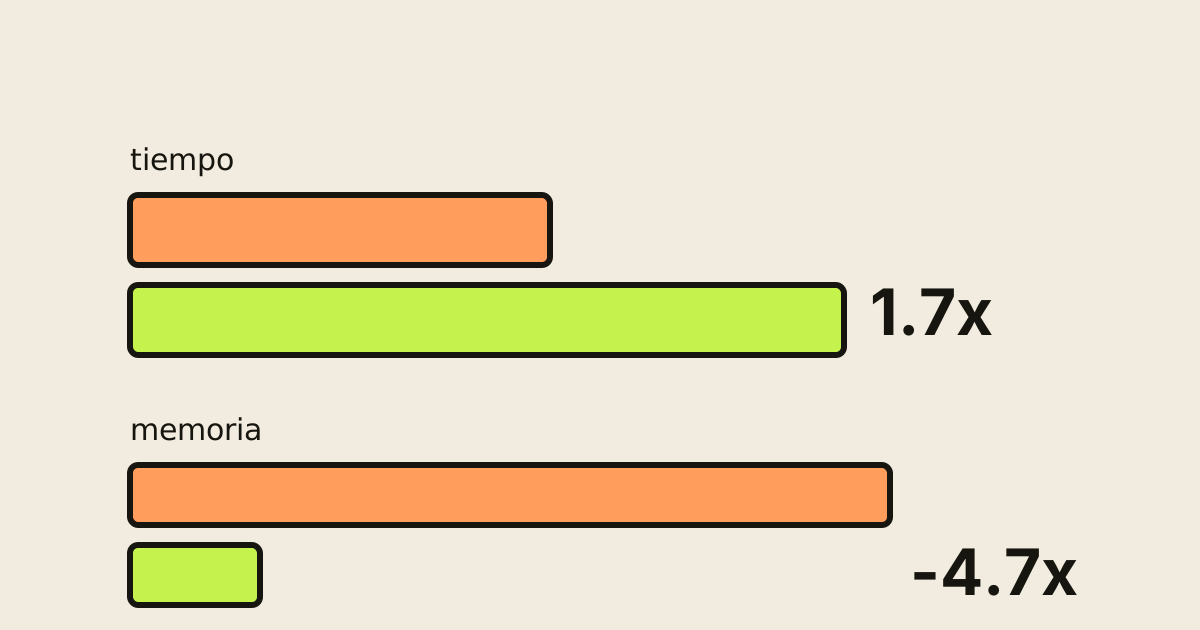
- 70 to 500 msend-to-end responseAccording to TypeSafe, 40x to 200x faster than a frontier model on queries like these
- USD 0.042per million input tokensOutput is free. The models it compares against charge between USD 0.20 and USD 10 for input
- 255options per Choice at mostBeyond that, score first and then choose
- 0%type errorsBy design, not by measurement
In its own evaluations across four flows, TypeSafe cites up to 193.6x more speed and 444.6x lower cost, and notes these are values from the high end of the range. It's reasonable to read 40x to 200x on speed as the fair estimate, and to test it with your own data.
When it fits
A model that writes
You need to draft, reason in several steps or know things about the world. It takes seconds, charges for output and can write more than needed.
A model that decides
The answer is an option, a number or a yes or no. It takes milliseconds, output isn't charged and it can't step outside the schema.
The cases TypeSafe mentions: classifying and routing, scoring, extracting, branching a flow, processing large volumes in parallel, applications where 100 ms matter, and verification with guardrails or jailbreak detection.
What it doesn't do
- It only processes text. For now it doesn't accept images, audio or video.
- It has no knowledge of the world beyond the context you pass in each call.
- It doesn't chat or draft: for that you still need another model.
- It's early access with a waitlist, and TypeSafe doesn't publish regions: it says the service currently runs from the U.S. West Coast.
How I'd think about it in a product
I'd start by looking at the flow and marking every step where a big model today returns a decision wrapped in text. That's the candidate list, and five boxes help filter it.
The output is closed
One option, a number or a yes or no.
Passes if the answer fits in a type and doesn't need a sentence.
It repeats a lot
The savings show up in volume, not in the first call.
Passes if it runs hundreds of times a day or more.
The latency is felt
Today the user or the flow waits seconds for a decision.
Passes if dropping to milliseconds changes something someone can see.
It can be compared
Test it on real cases against what decides today.
Passes if you have a set of cases with the expected answer.
There's a way back
It's early access and it can fail or change.
Passes if you can go back to your usual model without rewriting the flow.
It's a new model and almost everything known today comes from the people selling it. That's why testing it on your own cases counts for more than any figure on this page.