As an AI PM you don't always choose which piece falls. Sometimes others choose it: a director blows up the roadmap with something that wasn't planned, and suddenly you have to scramble with something nobody saw coming.
That used to mean weeks of rearranging everything. With AI the pace changed: what took days is now prototyped in hours.
The pieces never stop falling
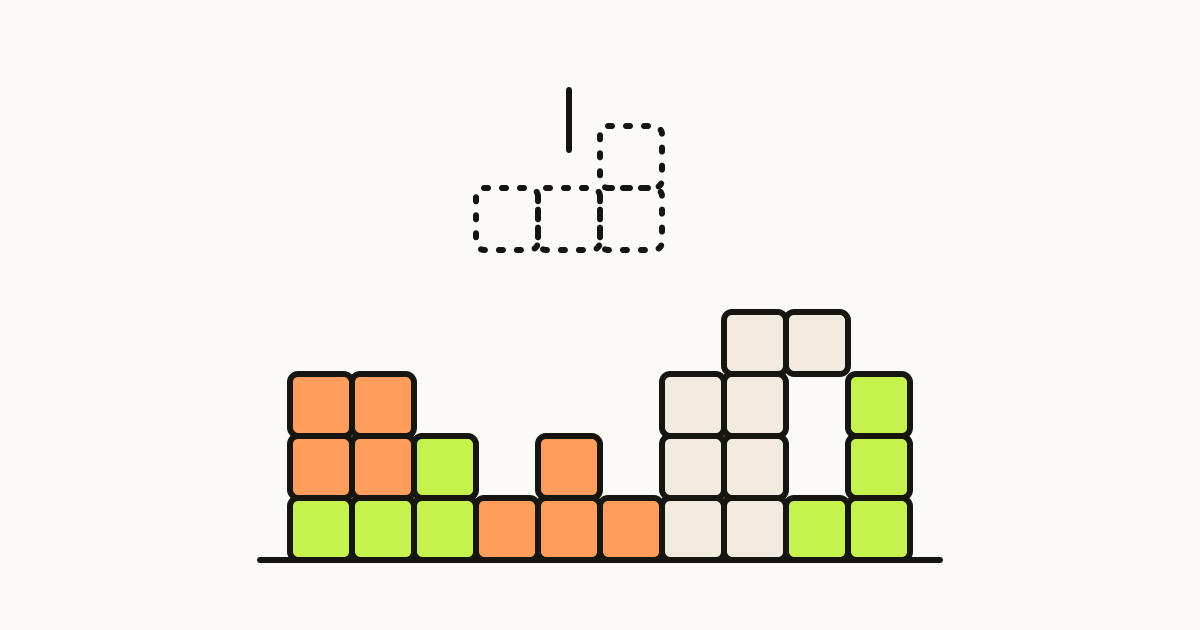
The backlog works just like Tetris. It doesn't matter how much you sort out today: tomorrow there are more pieces falling, and they don't ask if you're ready.
And they fall faster and faster. According to the Vercel Ship 2026 summary compiled by Digital Applied, half of Vercel's roughly six million daily deploys are now started by an AI agent, not a person.
What a gap looks like
Every feature you add without it fitting leaves a gap. Those gaps don't go away: they pile up as debt until one day nothing else fits and you lose the game.
You can spot them through three signs.
It shipped and nobody updated the docs
The product changed, and the only thing that explains it is still describing the old one.
Nobody ended up owning it
It works, nobody touches it, and the day it fails you have to find out whose it was.
Edge cases were left for later
They showed up in production, got noted down, and are still there. It's a list of gaps with a creation date.
The real skill
A good PM doesn't choose the pieces. They choose where and when they land.
With agents, that decision comes up more often and with less time. So it's worth having it ready beforehand, as a list and not as a hunch.
Does this close a gap we already have or open a new one?
A piece that doesn't fit is debt, even if it looks good in the demo.
Passes if you can name the gap it closes, or say which part of the product it connects to.
Can we test it small before going all in?
If it's prototyped in hours, testing it with a few people is cheap. Not doing it is expensive.
Passes if there's a version you can turn off without breaking anything.
Who owns it once it goes to production?
A piece without an owner is a gap with an expiration date.
Passes if there's a name, not a team.
The trap: the bureaucracy that drags along
A mistake gets fixed fast. What doesn't get fixed fast is the bureaucracy that piles up on top of that mistake.
That one does bury the game: the process nobody dared remove, the approval that no longer approves anything, the document that exists because it existed.